


Headline News
Spotlight Series: Featuring Adam Goldman-Yassen from Emory University / Children’s Healthcare of Atlanta
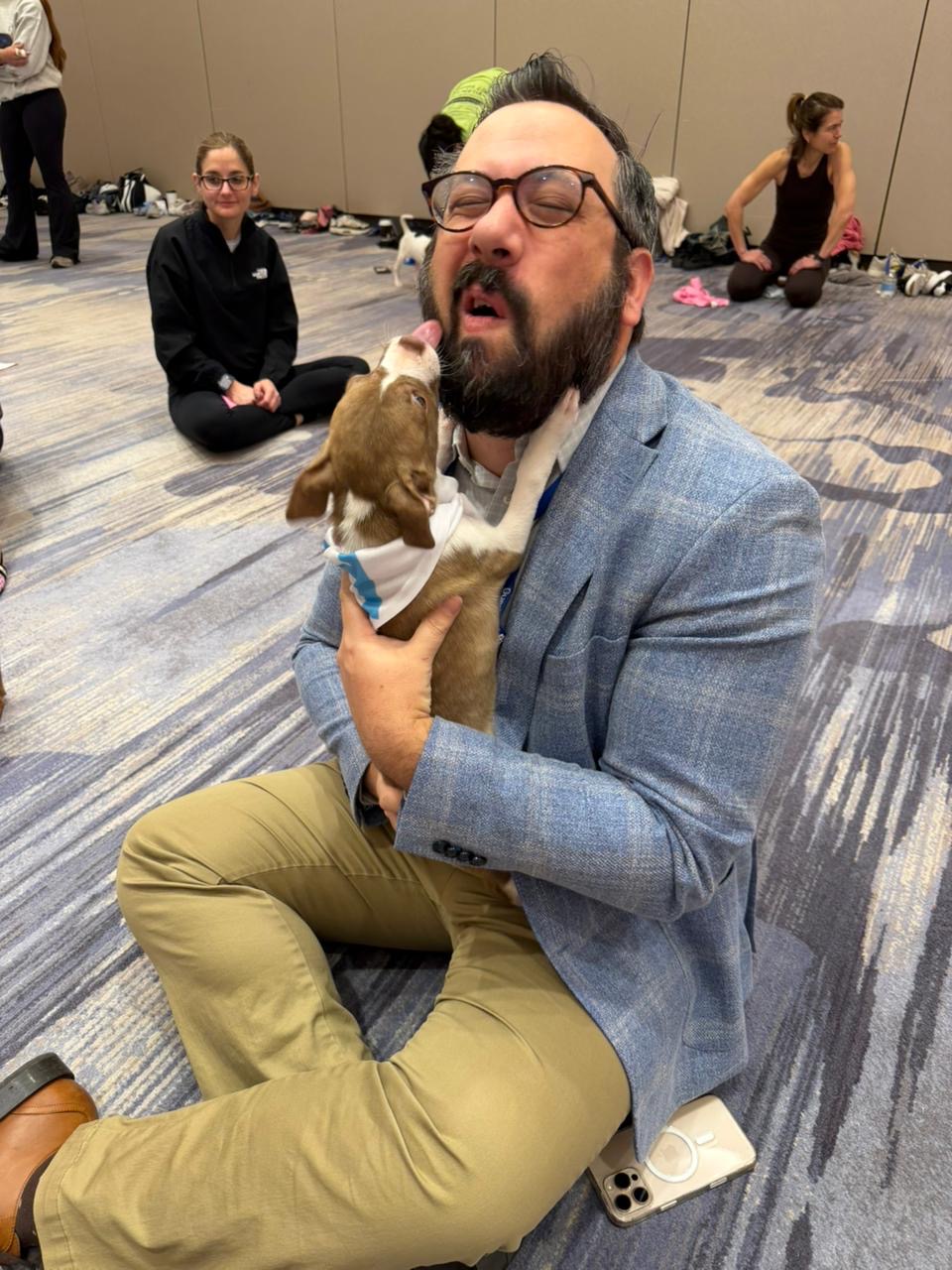
Pediatric Neuroradiology is ruff, but someone's gotta do it
Adam Goldman-Yassen
Professional Title: Assistant Professor of Radiology and Imaging Sciences; Director, Pediatric Neuroradiology Fellowship
Location: Atlanta, Georgia, USA
Fellowships: Neuroradiology at NYU Langone Medical Center and Pediatric Neuroradiology at the Children’s Hospital of Philadelphia (CHOP)
ASPNR member since 2018
What attracted you to pediatric neuroradiology? My path to pediatric neuroradiology was driven by indecision. I went into medical school thinking that I would specialize in infectious disease, having an interest both in global health and in the movie Outbreak. But after experiencing the day-to-day work, I became less enthused (lots of rounding). I bounced around trying out other specialties but was indecisive. I ended up taking a year off to do research in a malaria lab and get a master's degree in clinical research methods. The lab collaborated with a group performing neuroimaging in children with cerebral malaria in Malawi. I was amazed at the hidden information neuroimaging exposed, bringing new levels of diagnostic information and mechanistic understanding of disease processes. As I learned more about radiology, I found it fit my indecisive nature. Since everyone in the hospital got some form of imaging, I could enjoy being involved in the care of many patients (and without having to round).
My interest in pediatric neuroradiology blossomed in residency, when we imaged craniopagus twins before separation surgery. I was amazed by how important our imaging was for surgical planning to ensure the best outcomes from a complex surgery. With my research background, I always knew I wanted to go into academics. Back then, the major academic neuroradiology fellowships were all two years. Wary of doing a second fellowship year that seemed similar to the first, I decided to pursue sequential one-year adult and pediatric neuroradiology fellowships, with the goal of a career in academic pediatric neuroradiology. I have not been indecisive about my career choice since.
Name one or two things people would be surprised to know about you. When I am not at the hospital, I am likely in the kitchen perfecting my baking (especially sourdough) and pizza-making skills. Working from home helps when scheduling stretch-and-folds. Growing up, I was very into martial arts and earned a second-degree black belt in karate. I also enjoy snowboarding and building LEGOs with my kids.
Do you have a colleague or mentor who inspired you in your career? Throughout my training and early career, I have been fortunate to learn from many esteemed mentors, colleagues, and friends who have shaped my approach to pediatric imaging and research. I learned not to hesitate in drawing inspiration and seeking advice from many people, at different stages and about different aspects of my career. Research mentors in medical school taught me how to ask good questions and, indirectly, pointed me toward radiology. I had equally generous teachers in residency and in my adult neuroradiology fellowship, and the attendings at CHOP helped me hone my pediatric neuroradiology goals (and we got through COVID together!). At CHOA, I have continued to be guided by my colleagues in radiology and by collaborators across our partner specialties. I am so thankful for everything my mentors and colleagues have taught me (you know who you are) and for the opportunities I have had thanks to them.
What advice would you give to young professionals about how to get involved in ASPNR? The best way to truly feel like part of the ASPNR community is to dive into committee work and take advantage of the society’s collaborative spirit. Having served as the Chair of the Abstracts and Awards Committee and on the Annual Meeting Program Committee, I have found that volunteering for these roles is the most effective way to meet colleagues and influence the direction of our specialty. Don't be afraid to reach out to current committee members or chairs. We are always looking for fresh perspectives and energetic new voices to help the society grow. And come to the meeting! We are a very social and friendly group, so if you are looking to make connections, get more involved, and/or get career advice, come ask.
What advice would you lend to a trainee who is deciding between a career in academics versus a career in private practice? Choosing between academics and private practice often comes down to what fulfills you on a daily basis: the variety of high-volume clinical work or the opportunity to teach and discover. For me, the draw of academics was the ability to collaborate with interdisciplinary colleagues and pursue research, as well as to teach and inspire the next generation of pediatric neuroradiologists. If you find yourself energized by the prospect of shaping medical education or spending time solving complex research questions, then the academic path (despite its administrative hurdles) will likely be the most rewarding choice for you.
What is the best part of your job? The most rewarding aspects of my job are teaching trainees and working with wonderful colleagues, both in radiology and other departments, all with the common goal of taking care of children. There is nothing quite like watching a trainee gain the confidence to handle the most difficult cases. Equally gratifying is working through those same cases with radiology colleagues and collaborators from other specialties.
What was your childhood dream job? When I was young, I thought I would be an actor (I may have the only Jewish mother ashamed her son went into medicine rather than the arts). My mother even took me on auditions as a child, but (luckily) decided against a child actor career for me. I was very involved in theater in high school and college, even continuing to act in plays after I decided to major in biochemistry and pursue a career in medicine.
What for you was the highlight of the ASPNR 2026 meeting in Tampa? Will you be attending the Annual ASPNR Scientific Meeting in Miami in January 2027? There were so many highlights from ASPNR 2026 meeting in Tampa, including puppy yoga and dressing up like a pirate for the gameshow. One of the real highlights was the “Posters and Mimosas” session, where I got to see all the amazing pediatric neuroimaging research and educational posters from around the country and world. There was so much enthusiasm for pediatric neuroimaging, and I know the future of our specialty is bright. I am already looking forward to seeing everyone again at ASPNR in Miami in January 2027, where I hope to continue our collective work in advancing pediatric neuroradiology. I hope anyone interested will join us!
October 2026


